
A.I. is the New NAFTA
Voters will never forgive us if we fail to protect them.

Data centers are a proxy for the mega-rich and politicians making huge decisions without thinking through what happens to workers, just like they did with NAFTA. Big Tech may even be a repeat of 2008: the rich tanking the economy, getting bailed out, and nobody going to jail for it. Both of those happened on Democrats’ watch and contributed to our losses to Trump in 2016 and 2024. Now, Democrats must put people over Wall Street and Big Tech.
Intro
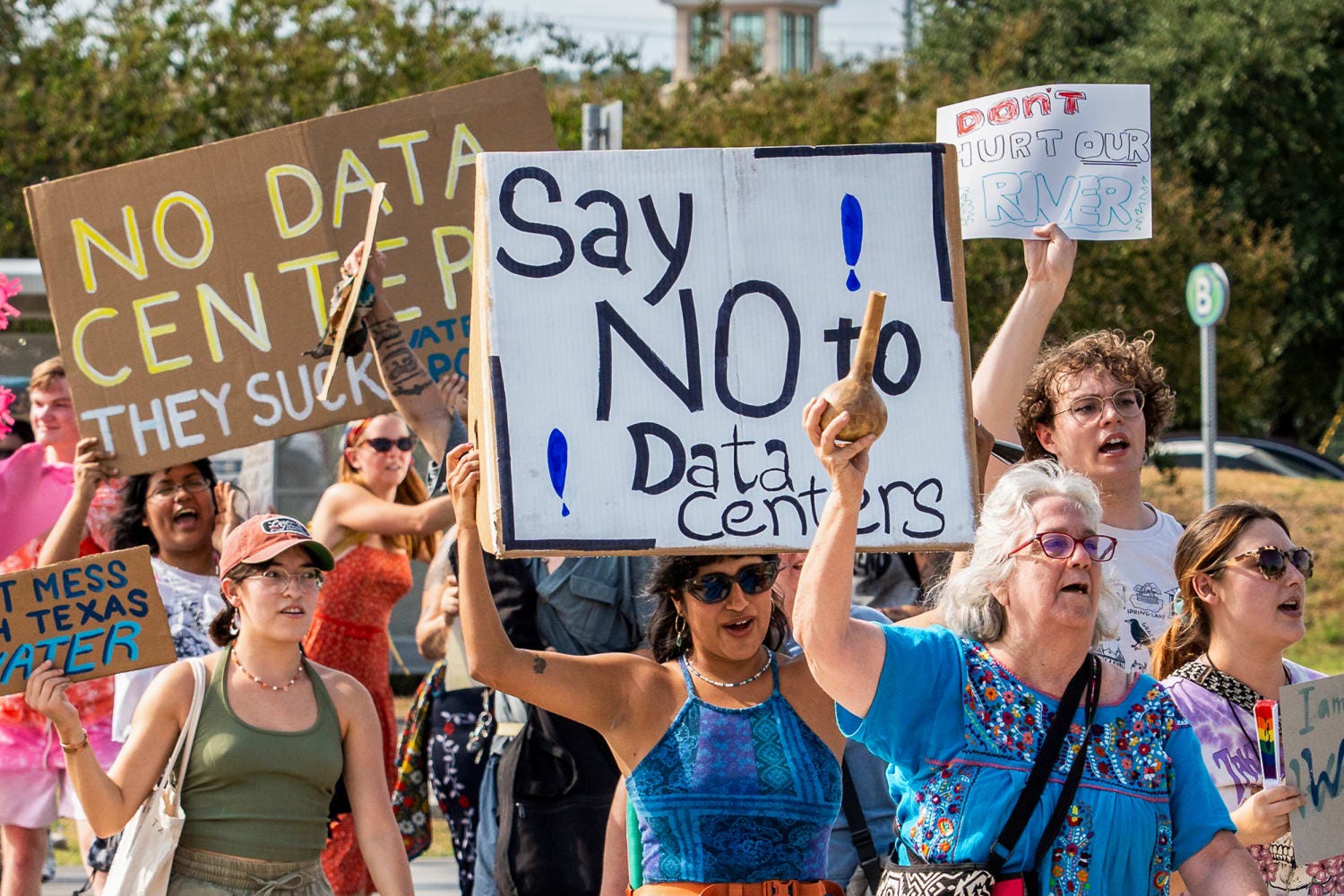
A.I. could benefit humanity in many ways IF tightly regulated and narrowly applied, but as it stands, there are serious concerns. Erosion of trust in the public sphere. The spike in energy and water use. Mass plagiarism. Mass surveillance. Weapons without accountability, and more. But right now, A.I. is creating an economic bubble that could crash the economy and it could cause a massive rupture in the relationship between work and wages. Despite all of this, it is being forced on us.
Voters aren’t asking us to stop A.I. entirely. They just want us to slow it down so we can all think before we act. Big Tech knows that opposition is building and regulation is coming. They want full speed ahead: to become too embedded to remove and too big to fail. That’s why they are trying to buy political power. Democrats have to pick a side. The candidates who are winning are the ones talking about prioritizing workers over big corporations.
A.I. Anthropologist Jasmine Sun calls it A.I. populism:

NAFTA and the Great Recession
Why don’t voters already know that we are on their side? We need to look at what people were experiencing when Democrats were in the White House.
When I say, “A.I. is the new NAFTA,” people in rural America know exactly what I mean. To millions of Americans, it is not just a trade agreement. NAFTA represents the entire shift from a single wage-earner being able to support a family to two wage-earners not being able to support a family.
1992: The North American Free Trade Agreement will forever be associated with President Bill Clinton. It may have been negotiated before he took office, but he made the case to the American people. Economic “experts” told us that, while there might be some adjustment, a rising tide would lift all boats. We now know that more than 50,000 factories have closed in the U.S. since 1992. When factories close, communities collapse, and addiction and suicide rise.
Some argue that this transition was due more to robotics than trade, but that only makes the parallels to A.I. even stronger. In either case, something moved millions of people from solid middle-class jobs to service jobs at a fraction of the wages, while political leaders told them everything was just fine. Whether accurate or not, many people in rural communities attribute the devastation to NAFTA and hold President Clinton responsible.

Thank you for reading Reframing America! My work is completely financed by subscribers like you! All content is free, but many people choose to become paying subscribers to help support this mission of improving how we communicate! Use this link to subscribe or upgrade! Thank you!
2008: People placed a lot of hope in President Obama. They thought he would stand up to the corporate world after it crashed the housing market and the economy. Despite his many other wonderful qualities and achievements, Obama did put Wall Street insiders in positions of power, and while millions lost their homes, banks got bailed out. People have not forgotten that nobody went to jail. The economy as a whole recovered, but wages continued to stagnate as corporations consolidated and inequality grew.
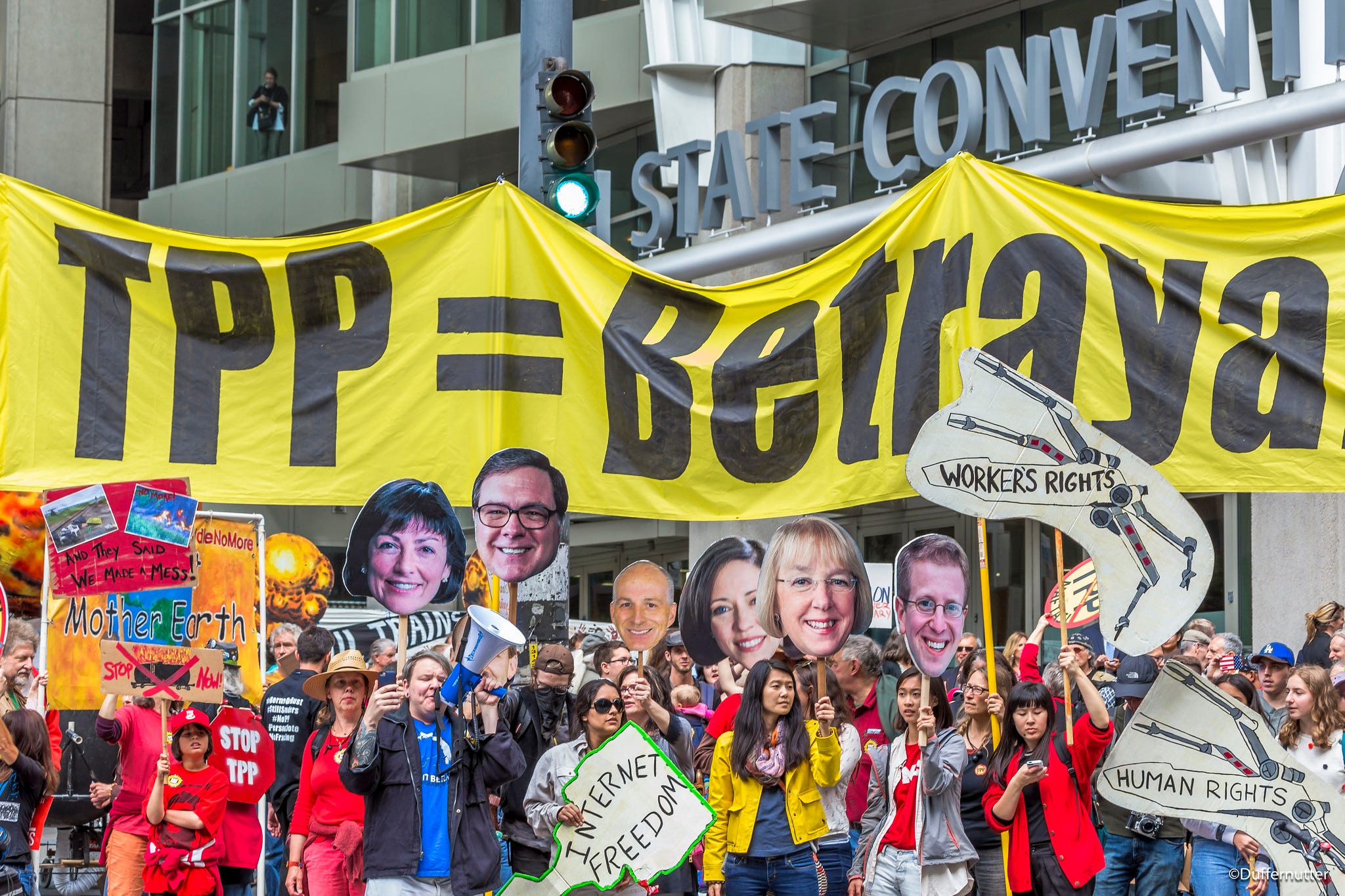
2016: To too many Americans, the Clinton name was associated with economic devastation and gaslighting. Hillary Clinton's campaign strategy was more gaslighting: telling people that, despite what they might be experiencing, the economy was actually going great. Meanwhile, what was our Democratic president up to? Obama was on the road trying to sell the American people on another trade agreement: the Trans-Pacific Partnership. The TPP may have been a good thing. The reality is that any trade agreement would have been politically toxic.
2020-2024: Our data guru friend G. Elliot Morris points out that Kamala Harris’ loss in 2024 can be attributed to two things: global inflation and the sitting President’s approval rating. Democrats could have influenced at least one of those. They could have told the story of Biden’s incredible performance on the economy while it was happening. He and his team rapidly restored the economy from the pandemic shutdown and engineered a “soft landing” from post-pandemic global inflation. He also took big steps toward changing the balance of power between owners and workers: bringing back anti-trust enforcement, supporting organizing rights, prosecuting wage theft, outlawing non-compete agreements, and making massive investments in infrastructure, manufacturing, and supply chains for technology and renewable energy.
Under Biden, Democrats actually were fighting for working people and against the power of concentrated wealth. Why didn’t they tell anyone? Big corporate donors did not want to be portrayed as the bad guys, so political advisors decided that the White House should not frame Biden’s actions as siding with workers against bad corporate actors. Later, during the campaign, Kamala Harris did the same thing Hillary Clinton did in 2016: she tried to convince people that, despite what they might be experiencing, the economy was actually going great. It’s never a good idea to try to win votes by telling people that they are wrong about what is happening in their own lives. Instead, they should have acknowledged the long-term erosion of wages and buying power, told people what they were actually doing to make things better, and asked voters to give the plan time to work by keeping Democrats in power.
Will A.I. be NAFTA or 2008, or both?
The NAFTA route: A.I. can continue to steamroller our lives. It can improve to the point where it allows the investor class to make astronomical profits while laying off many millions of people. We would have to completely re-evaluate the relationship between labor and wages and turn toward Universal Basic Income or some mechanism for moving wage-earning toward the kind of work that only humans can do.
The 2008 route: It looks more and more like the A.I. bubble will burst, and sooner rather than later. The stock market has been artificially propped up by data center construction and tech companies padding their profits. Now, it looks like A.I. companies have been subsidizing the cost of their products and when they start charging what it really costs, the demand is going to plummet and these heavily indebted companies are going to fail. The upcoming series of A.I. company IPOs is starting to look more and more like a “pump and dump” scheme where the retirees of America are forced to buy A.I. companies through their stock market index funds at wildly inflated prices so the current owners can cash out and run for the hills.
Moving Forward
People know when they are getting screwed and being lied to, and when it comes to A.I., all of their bullshit detectors are going off at once. Voters most fear the NAFTA scenario. They assume we will abandon millions of Americans to economic devastation and deaths of despair, because that’s what we did before. The more likely scenario is that the companies fail and the stock market plummets. In that case, voters assume we will bail out Big Tech without punishing anyone or requiring any meaningful change in behavior, because that’s what we did before. They need to hear that we will not do what we have done in the past.
When Trump talked about “Making America Great Again,” he was (falsely) promising a return to the days when a single wage earner, a factory worker or a mail carrier, could buy a house and a car, send the kids to college and retire with a pension. The least we can do is acknowledge the cost families have paid in needing two adults working full-time jobs (and side hustles) in order to support a family, and still not being able to afford healthcare, college and retirement. We can talk about what happened to people when we transitioned from a manufacturing to a service economy and what that might tell us about the impact of A.I. We can talk about why we need government to do more to prevent companies from crashing the economy and to hold people accountable when they do.
There are many discussions about what to do about A.I. to alter the economic impacts and regulate or even outlaw many of the worst societal impacts. All of these options would require strong action by political leaders, including exerting a lot of control over A.I. companies. Voters doubt that we have the spine for the job. It is up to us to convince them that we do.
We can and must make the case for slowing the f*** down and thinking before we act. We can stop the building of new data centers. We can make it perfectly clear that we see what this might do to workers and their role in the economy and society, and that, even if we don’t have all the answers, our guiding star is making sure this and any new technology makes their lives better, not worse.
See the NOTES below for more on how to talk about economic populism to American voters.

Thank you so much for reading this. I hope it is of use to you in your work and activism!
In solidarity, always,

Like this post, but not ready to become a paying subscriber? Leave me a tip of any amount you like at my tip jar! Thank you!
Contact me at antonia@antoniascatton.com or (202) 922-6647

NOTES:
How to talk about economic populism to American voters:


I was going to delete this comment from kirstin lathrop as it is clearly from an A.I. bot, but it is such a glaring example of an attempt to attack from the left I thought I would leave it as an object of study. New account with 4 followers, supposedly both trans and disabled, dreadfully bad writing and incoherent argument trying to say that regulating A.I. would be bad for disabled people.
Harris running around telling everyone that the economy was great “just look at Wall St.” was political malpractice. I’m a life-long Democrat, so I’m used to eating shit, but it was pretty hard to take. I guess I was supposed to jump for joy when she landed a dotcom billionaire too, as though they wouldn’t want something for their support.
I was deemed to be a displaced worker under NAFTA. All of the production cabinet-makers who I worked with were going to become coders. Most of them wound up taking cabinet jobs for less money and benefits, instead.
The leadership of the Democratic Party are better than the GOP, obviously, but none of them seem to be in contact with people who are not doing well.